It is damage to the retina and the retinal circulation (Blood vessels) due to systemic hypertension (i.e. high blood pressure). Patients with hypertensive Retinopathy will present with virtually no visual symptoms till profound vision loss. They usually report with headaches or blurred vision. Hypertension can also damage the choroidal circulation and is responsible for optic and cranial neuropathies. Hypertension may also present in the form of subconjunctival haemorrhages.
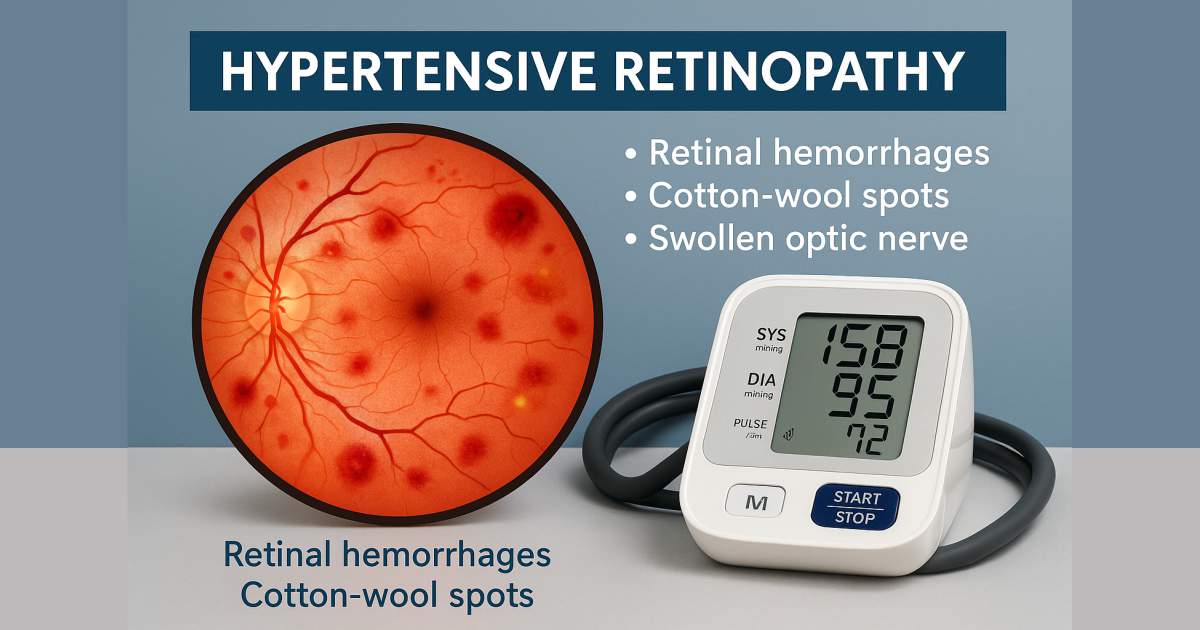
How Hypertension Affects the Eyes?
Systemic Hypertension is defined as a systolic pressure greater than 140 mm Hg or diastolic pressure greater than 90 mm Hg. Most ocular abnormalities are associated with systolic blood pressures greater than 160 mm Hg. Hypertension affects all organs in the body where small blood vessels are there, like Retina and Kidney.
Smaller blood vessels bear the most brunt of raised blood pressure. The diffuse arteriolar narrowing is characteristic of hypertensive Retinopathy, this is secondary to vascular constriction in acute Hypertension and due to raised cholesterol in chronic Hypertension.
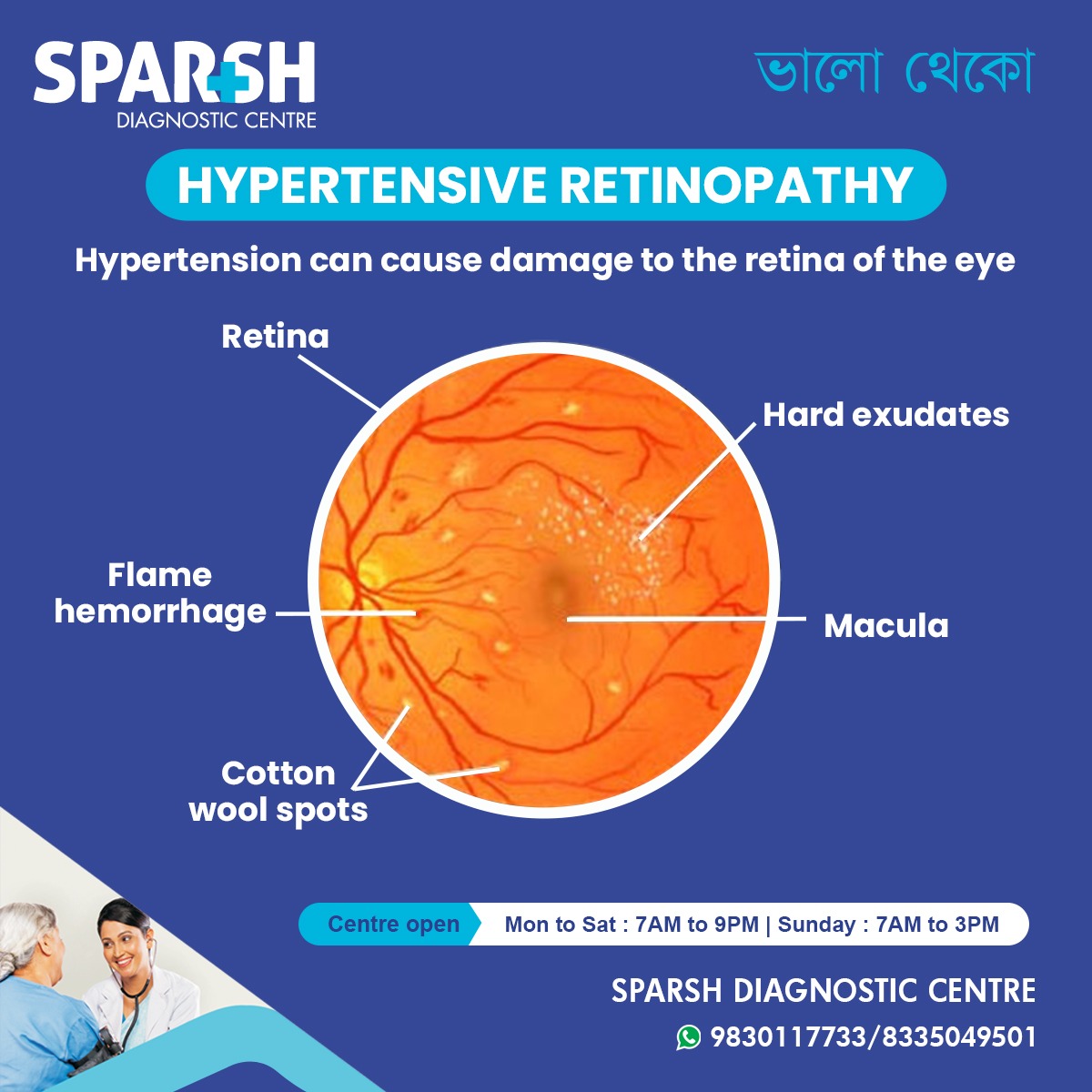
Hypertensive Retinopathy Complications
Patients of hypertensive Retinopathy are vulnerable to several health-related complications like:
- Retinal artery occlusion: This takes place when an artery in the retina of the eye gets closed or blocked due to clots that often result in vision loss.
- Malignant Hypertension: This leads to a rapid spike in blood pressure which can cause vision loss. However, this is a rare occurrence that, in many cases, can be life-threatening.
- Retinal vein occlusion: This condition takes place when a vein in the retina gets blocked because of clots.
- Ischemic optic neuropathy: In this scenario, the normal blood flow that goes to the eye gets blocked, which damages the optic nerve of the eye. It is this part that transmits multiple images to the brain.
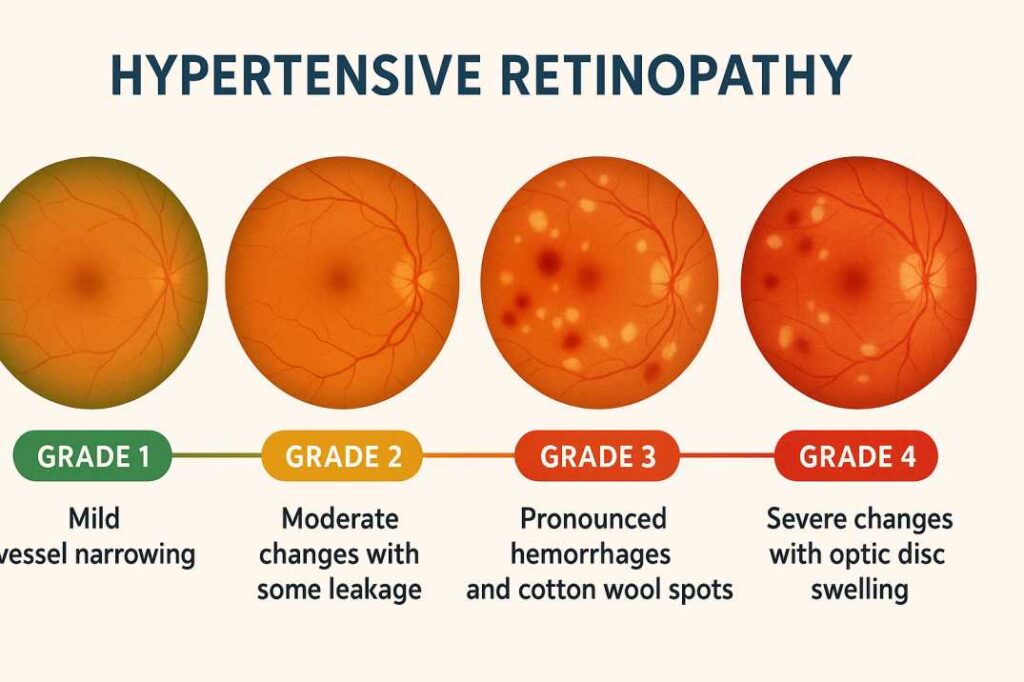
Management of Hypertensive Retinopathy
In hypertensive Retinopathy, it is imperative to understand that the only way to treat or control it is by keeping high blood pressure in check. This can be achieved by bringing drastic changes in daily lifestyles like:
- Practising yoga and regular exercise: Physical activity helps lower blood pressure naturally
- Quitting habits like smoking and reducing alcohol intake: These habits contribute to high blood pressure
- Losing weight and bringing dietary changes: A healthy diet and maintaining proper weight are crucial for blood pressure management
As mentioned above, symptoms of hypertensive retinopathy stages can be controlled by bringing healthy and positive life changes. In addition, if you want to take allopathy treatment, it is best to get in touch with a doctor who might suggest medications like calcium channel blockers, beta-blockers, angiotensin-2 receptor blockers (ARBs), ACE inhibitors, thiazide diuretics, and more to lower your high blood pressure levels.
Prevention and Regular Monitoring
Regular eye examinations are crucial for individuals with high blood pressure. Early detection of hypertensive retinopathy can help prevent vision loss. It is recommended that people with hypertension have regular dilated eye exams to monitor retinal health.