The macula, a critical part of the retina, is essential for sharp central vision, enabling us to see fine details, recognise distant objects, and perceive colours with accuracy. This makes it central to understanding macular oedema.
Macular edema occurs when abnormal fluid builds up in the macula, causing it to swell. This often leads to blurred central vision and difficulties with daily activities such as reading, driving, or recognising faces.

Symptoms of Macular Edema
Macular edema is usually painless and often goes unnoticed in the early stages, making it challenging for patients to recognise until vision problems become more apparent.
Intravitreal injections of Anti-VEGF medicines work by inhibiting the growth of abnormal blood vessels in the retina, reducing leakage and stabilising vision. These treatments have shown significant success in improving visual outcomes for patients with macular edema.
- Blurred or wavy central vision
- Colors may appear different
- May experience difficulty in reading

Causes of Macular Edema
Macular edema can occur due to several underlying eye and systemic conditions. In diabetes, prolonged high blood sugar levels can weaken and damage retinal blood vessels, leading to fluid leakage into the macula and subsequent swelling.
Hypertension (high blood pressure) can also contribute by leading to retinal vein occlusions, which block normal blood flow and trigger fluid accumulation. Additionally, age-related macular degeneration (AMD) is another common cause, where degenerative changes in the macula damage blood vessels, allowing fluid or blood to leak and impair central vision.
A routine dilated fundus examination conducted by an experienced ophthalmologist is vital for diagnosing macular edema, as it provides a clear view of the retina and helps detect early fluid leakage or swelling.
- Diabetes: Certain drugs, including some used for cancer treatment or eye therapies, can occasionally lead to macular edema as a side effect. Patients should always share their medication history with their ophthalmologist to assess and minimise risks.
- Age related Macular Degeneration: Here abnormal blood vessels leak fluid and cause macular swelling.
- Retinal Vein occlusions: When the veins in the retina become blocked, blood and fluid then leak out into the macula.
- Vitreomacular traction (VMT)
- Genetic/Hereditary disorders: such as Retinoschisis or Retinitis Pigmentosa.
- Inflammatory eye diseases: Conditions like uveitis, where the body attacks its own tissues, can damage retinal blood vessels and cause swelling of the macula.
- Medication: Certain drugs, such as those used for treating cancer or eye conditions, can cause side effects like macular edema in rare cases. It's important for patients to discuss their medication history with their doctor to minimize risks.
- Eye Malignancies: Both benign and malignant tumors can lead to macular edema.
- Eye surgery: It's not common, but sometimes after glaucoma, retinal or cataract surgery, you can get macular edema.
- Injuries: Trauma to the eye.
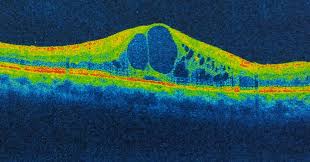
Macular Edema Risk Factors
- Metabolic conditions (diabetes)
- Blood vessel diseases (vein occlusion/blockage)
- Aging (macular degeneration)
- Hereditary diseases (retinitis pigmentosa)
- Traction on the macula (macular hole, macular pucker, and vitreomacular traction)
- Inflammatory conditions (sarcoidosis, uveitis)
- Toxicity
- Neoplastic conditions (eye tumors)
- Trauma
- Surgical causes (following eye surgery)
- Unknown (idiopathic) causes
Macular Edema Prevention
Anyone with diabetes should have their eyes checked annually, at the least. People with family history or underlying genetic condition can have a yearly eye examination.